East Cobb Homes And Schools For Growing Families
May 28, 2026
May 28, 2026
If you are searching for more space, a practical commute, and a school setup that fits your long-term plans, East Cobb likely keeps showing up on your list. That makes sense, but it also means you need more than a general impression because East Cobb is not one uniform market. The real decision often comes down to matching the right home, price point, and daily routine to the right school feeder pattern. Let’s dive in.
East Cobb generally refers to the unincorporated, Marietta-addressed suburban area in northeastern Cobb County, roughly east of I-75 and I-575 and north of the Chattahoochee River. For many buyers, its appeal comes from a familiar mix of established single-family neighborhoods, strong day-to-day amenities, and a location that still keeps Atlanta within reach.
What makes East Cobb especially important for growing families is how often the home search becomes a school-zone search. Instead of thinking about East Cobb as one big neighborhood, it helps to think of it as a collection of school-linked submarkets. That lens can make your search much more focused.
In East Cobb, school assignments vary by address, and Cobb County notes that attendance-zone maps are approximate and can change. That means you should always verify school assignment by exact address before making assumptions about a property.
This matters because buyers often organize their search around major high school clusters. In East Cobb, the school anchors that come up most often are Walton, Lassiter, Pope, and Sprayberry, with elementary and middle school feeders changing depending on where a home sits.
Walton High School is located on Bill Murdock Road and is described by Cobb County as a comprehensive, college-prep high school in eastern Cobb. East Side Elementary feeds all of its students to Walton through Dickerson or Dodgen Middle, and Mount Bethel Elementary also feeds to Dickerson or Dodgen and then Walton.
Neighborhoods commonly associated with the Walton side of East Cobb include Indian Hills, Ashebrook, East Hampton, the East Cobb Park area, and Paper Mill. For many buyers, this part of the market draws attention because of its location, established neighborhoods, and school-linked demand.
Lassiter High School, located on Shallowford Road, is one of East Cobb’s long-established school anchors. Cobb County describes it as a large, established school with repeated Blue Ribbon and Georgia Public School of Excellence recognition.
According to the district’s feeder information, Lassiter-area elementary feeders include Davis, Garrison Mill, Rocky Mount, and Shallowford Falls. Community-guide examples often tied to the Lassiter side include Highland Pointe, Highland Ridge, Northampton, and Windsor Oaks.
Pope High School on Hembree Road is another major East Cobb draw. Cobb County describes it as a comprehensive school with a strong college-going culture.
Tritt Elementary feeds 100% to Hightower Trail Middle and then Pope, while Shallowford Falls can feed to Hightower Trail or Simpson and then to Pope or Lassiter depending on address. Neighborhood examples commonly associated with the Pope side include Chimney Springs, Chestnut Creek, Kings Farm, and Paper Mill.
Sprayberry High School helps round out the broader East Cobb picture. Its feeder list includes elementary schools such as Addison, Bells Ferry, Blackwell, Chalker, Kincaid, Mountain View, Nicholson, and Sedalia Park, with middle school feeders including Daniell, McCleskey, and Simpson.
For buyers, that matters because Sprayberry widens the conversation beyond the best-known Walton, Lassiter, and Pope corridors. If you want more options in home style, location, or budget, this part of the East Cobb story is worth exploring.
East Cobb is still primarily a detached-home market. Cobb County’s 2026-2030 housing plan says detached one-unit homes account for 71% of county housing units, which aligns with what many buyers expect when they start searching here.
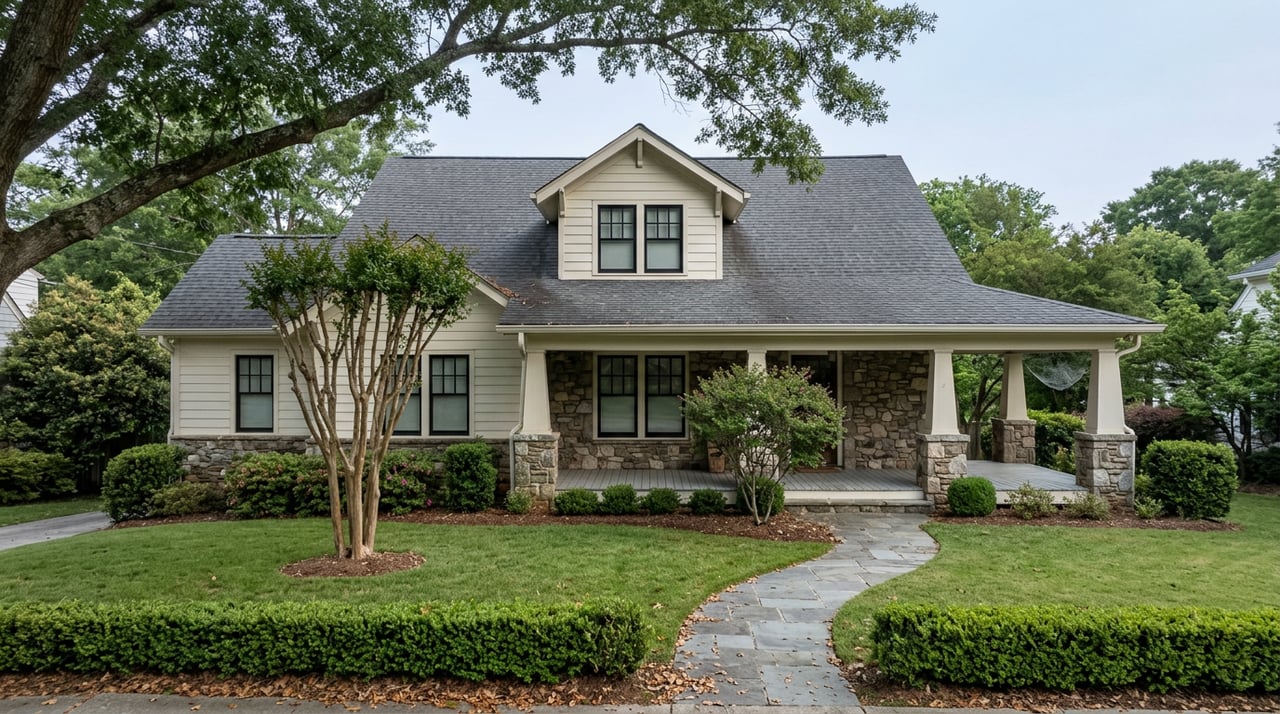
Most of the housing stock feels established rather than brand new. Many neighborhoods were built in the 1970s through the 1990s, though newer construction still appears in select pockets. That gives you a mix of classic brick homes, larger traditional properties, updated interiors, and occasional newer builds with more modern layouts.
For growing families, this variety can be a real advantage. You may find a home with a larger lot and mature landscaping, or a more recently built property with one-level living and current finishes, depending on your priorities.
Current market snapshots place East Cobb around a $495,000 median sale price as of March 2026. That compares with about $425,000 for Cobb County overall and about $570,000 for Sandy Springs.
In simple terms, East Cobb often sits above the countywide average, but below some closer-in north metro alternatives. For many buyers, that creates a useful middle ground if you want suburban space and a school-specific search without automatically jumping to the highest price points in the region.
A practical way to think about East Cobb pricing is by school zone and renovation level more than neighborhood name alone. Local guides note that Walton-area homes tend to be the highest priced, followed by Lassiter and Pope, which reflects how buyers often weigh school demand, lot size, and home condition.
A broad East Cobb search can feel overwhelming at first. The easiest way to simplify it is to decide what matters most before you start touring homes.
Think about how you actually live day to day. If your weekday schedule depends on driving to work, after-school activities, and errands, your search should account for road access and drive times, not just the home itself.
East Cobb is roughly 20 miles northwest of downtown Atlanta, and community guides place the drive to downtown at about 30 to 45 minutes depending on route and traffic. Public transportation is limited, so most residents rely on cars.
Most buyers are balancing three things at once:
You may decide that a larger lot matters most. Or you may prefer a more renovated home even if it means a smaller yard. Getting clear on your tradeoffs early can save time and reduce stress.
This step is essential in East Cobb. Because attendance maps are approximate and can change, school assignment should always be confirmed by the exact property address.
That is especially important in areas where feeder patterns can split between middle schools or high schools. A home that seems to fit your plan online may need a closer look before you move forward.
East Cobb’s appeal is not just about homes and school zones. The area also offers the kind of daily amenities that can make life easier and more enjoyable.
East Cobb Park includes playgrounds, trails, picnic pavilions, open fields, and an outdoor stage. Fullers Park adds fields, tennis courts, a recreation center, and more trails, giving buyers another strong option for outdoor time and organized activities.
The area is also served by East Cobb Library and Mountain View Regional Library. For shopping and errands, Cobb County highlights The Avenue at East Cobb as a major shopping district, and the Northeast Cobb Community Center adds another local venue for events and programs.
If you are moving for more space and a better overall fit for your next season of life, East Cobb gives you a lot to work with. The key is to approach it as a collection of distinct micro-markets rather than one simple search area.
In practice, that means comparing homes based on feeder pattern, renovation level, lot size, and commute impact. When you do that, East Cobb becomes easier to understand, and your search becomes much more strategic.
Whether you are relocating within metro Atlanta or coming from outside the area, I can help you narrow the options, interpret the tradeoffs, and focus on the homes that best match your goals. If you are planning a move to East Cobb or preparing to sell in the north metro Atlanta market, connect with Catherine Newsome for thoughtful guidance and a high-touch, data-driven approach.
November 19, 2026

November 12, 2026
November 5, 2026
October 29, 2026
October 22, 2026
October 15, 2026
October 8, 2026
October 1, 2026
September 24, 2026
Whether you're buying or selling, Catherine Newsome is committed to guiding you through every step of the real estate process with integrity, passion, and personalized service. Let her help you find your dream home or sell your property for the best price—your goals are her priority!