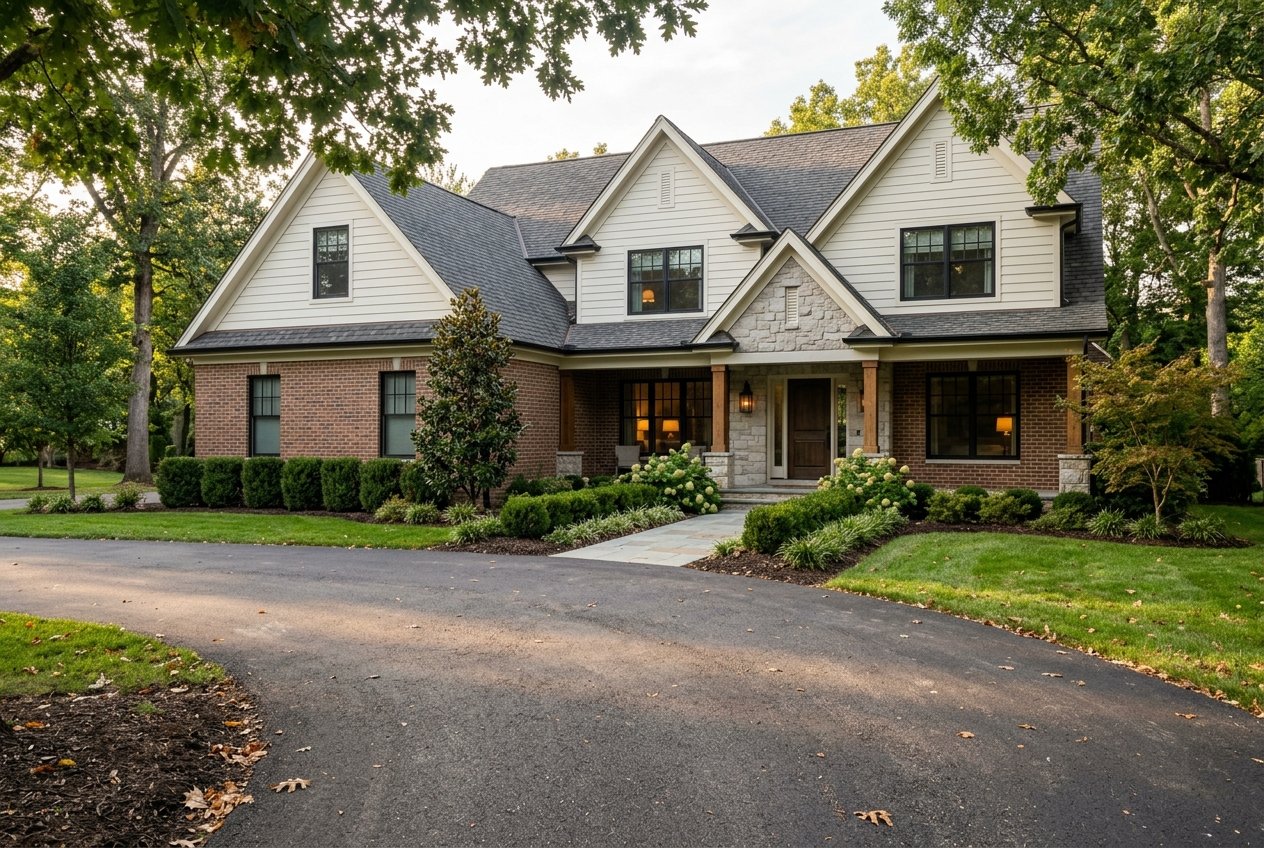
Everyday Life In Milton’s Estate Neighborhoods
June 4, 2026
June 4, 2026
If you picture Milton as just another Atlanta suburb, estate neighborhoods will quickly change your mind. Life here tends to feel quieter, more spread out, and more connected to the land than in many nearby communities. If you are exploring whether Milton fits your lifestyle, this guide will help you understand what daily life really looks like, from privacy and outdoor space to errands, dining, and traffic patterns. Let’s dive in.
Milton’s estate-neighborhood character starts with land use. The city says about 85% of its more than 39 square miles is agriculturally zoned, and residential lots in those areas must be at least 1 acre. It also defines a large lot as 3 acres or more, which helps explain why so many properties feel spacious and private.
The city also says more than 90% of its land is low- or very low-density residential. In daily life, that often means detached homes on larger parcels, longer driveways, more tree cover, and a streetscape that feels open instead of tightly packed. If you value breathing room, Milton’s layout is a big part of the appeal.
In Milton, estate neighborhoods are not only about home size. They are also about how a property sits on the land and how that land can be used. You will often find custom homes, acreage properties, horse farms, and homesites that preserve a more rural setting.
That creates a different day-to-day experience than you might expect in denser North Fulton communities. You may have fewer homes in view, more natural buffers between properties, and a stronger sense of retreat when you pull into your driveway. For many buyers, that privacy is one of Milton’s biggest advantages.
Milton’s rural identity is not just branding. A 2024 farm census by the Milton Equestrian Committee found more than 200 active horse farms in the city. The city also notes that some large lots already support horses, while others are intentionally kept large to preserve rural character.
That matters because acreage in Milton often serves a real purpose. It is not only there for curb appeal. In some parts of the city, open land, barns, paddocks, and riding space are part of the everyday backdrop.
The city’s Equestrian Committee exists to support Milton’s horse community. The Trails Advisory Committee also focuses on preserving the city’s rural nature while expanding access for walking, biking, and horseback riding.
For you as a buyer, that means the estate lifestyle can feel active and outdoorsy in a very specific way. Even if you do not own horses, you may still appreciate living in a place where trails, pasture-like greenspace, and rural scenery remain part of the environment.
Milton’s parks and greenspaces support the lifestyle that many estate buyers are looking for. Birmingham Park includes nine multi-use natural-surface trails and is used by both equestrians and hikers. It is the kind of place that reinforces how closely outdoor recreation and open land are tied together in Milton.
Milton City Park and Preserve offers another layer of convenience. It includes 130 acres of passive preserve land with a 2.5-mile loop trail, along with an active area that features the pool, tennis center, and community center. That combination gives you both natural space and organized recreation in one destination.
The Freemanville-Birmingham greenspace adds a 21-acre pasture-like setting and includes horse-trailer turnaround parking. Taken together, these spaces make it clear that Milton’s open land is not accidental. It is part of how the city functions and how many residents spend their time.
One of the biggest questions buyers ask about estate neighborhoods is simple: will daily errands feel inconvenient? In Milton, convenience is not spread evenly across the city, but it is available in key nodes. Crabapple is the clearest example.
The city identifies Crabapple as Milton’s primary town center. It is home to City Hall, the Milton Library, and many of the city’s schools. It also anchors community events such as the Farmers Market, the Independence Day Parade, and Crabapple Fest, which the city says attracts more than 30,000 attendees each year.
Mayfield Park helps show why Crabapple matters in everyday life. The park sits in downtown Crabapple and is within walking distance of restaurants, shops, offices, and several schools. If you live in an estate neighborhood nearby, this area often becomes a regular part of your weekly routine.
That does not mean every Milton neighborhood is walkable in the traditional town-center sense. In most cases, estate living here still means driving to your destinations. But it also means you can enjoy privacy at home without feeling cut off from useful local amenities.
Milton’s restaurant scene is real, but it is concentrated in a few corridors rather than evenly distributed throughout the city. According to the city’s Restaurant Week information, participating restaurants are found along Crabapple Road, Heritage Walk, Highway 9, Windward Parkway, and nearby streets.
This creates an important lifestyle balance. Your neighborhood may feel quiet and tucked away, yet dinner, coffee, and everyday services are still within reach by car. For many buyers, that trade-off works well because it preserves the peaceful feel of estate living.
Outside of Crabapple, Highway 9 and Deerfield serve as major commercial anchors. The city describes Highway 9 as the backbone of its main commercial area, with Milton’s three-mile segment running from Windward Parkway to the Forsyth County line.
The city’s long-range Destination Deerfield plan is intended to create a more walkable live-work-gather district with stronger connections, green space, and design standards. For you, that helps explain how Milton supports a large-lot lifestyle while still offering access to retail, restaurants, and services nearby.
If schools are part of your home search, Milton is served by Fulton County Schools. The district has about 89,600 students and 104 schools, and it uses attendance-zone maps plus a home-address locator to determine school assignment. In other words, the assigned schools depend on the specific property.
Public-school anchors nearby include Milton High School on Birmingham Highway, Cambridge High School on Bethany Bend, Northwestern Middle School on Birmingham Highway, Hopewell Middle School on Cogburn Road, and Crabapple Crossing Elementary School on Birmingham Highway. When you are narrowing neighborhoods, it is smart to verify school assignments based on the exact address rather than assume coverage by area name alone.
Milton’s estate neighborhoods offer space and privacy, but they also come with some trade-offs. The main corridors are State Route 9 and State Route 372, which includes Birmingham Highway and Crabapple Road. These roads carry much of the city’s daily movement.
The city says projected traffic volumes on the Highway 9 segment exceed 31,000 vehicles per day. It also notes that weekday traffic around Milton High, Northwestern Middle, and Crabapple Crossing can back up along Birmingham Highway and into the Heritage Walk roundabout. If you are used to a denser neighborhood with more route options, that pattern is worth factoring into your routine.
For many buyers, Milton is a conscious lifestyle choice. You are often choosing larger lots, a quieter setting, and a more distinctive property type over dense walkability throughout the neighborhood. That can be a great fit if privacy and land rank high on your list.
If your priority is stepping outside your front door and walking to a wide mix of shops and restaurants every day, you will likely notice the difference. But if your ideal home includes acreage, mature trees, and a more tucked-away feel, Milton’s estate neighborhoods stand out for exactly those reasons.
Milton tends to appeal to buyers who want more than square footage alone. You may be looking for room to spread out, a custom home on a larger parcel, or a property that feels private without being disconnected from the rest of North Fulton. In that case, Milton offers a distinct blend of rural character and practical access.
It can also be a strong option if you appreciate outdoor living. Trails, greenspace, equestrian culture, and a land-focused environment all shape how the city feels from one day to the next. That identity is difficult to replicate in more compact suburban settings.
If you are weighing Milton against nearby communities, the real question is often less about price point and more about lifestyle. Do you want more land, more privacy, and a quieter visual environment, even if that means driving to most daily destinations? For the right buyer, the answer is an easy yes.
If you are considering a move to Milton or preparing to sell an estate property here, working with someone who understands how land, presentation, and neighborhood context influence value can make all the difference. Catherine Newsome offers thoughtful, high-touch guidance for buyers and sellers who want a polished, informed approach in Milton and across north metro Atlanta.
November 19, 2026

November 12, 2026
November 5, 2026
October 29, 2026
October 22, 2026
October 15, 2026
October 8, 2026
October 1, 2026
September 24, 2026
Whether you're buying or selling, Catherine Newsome is committed to guiding you through every step of the real estate process with integrity, passion, and personalized service. Let her help you find your dream home or sell your property for the best price—your goals are her priority!