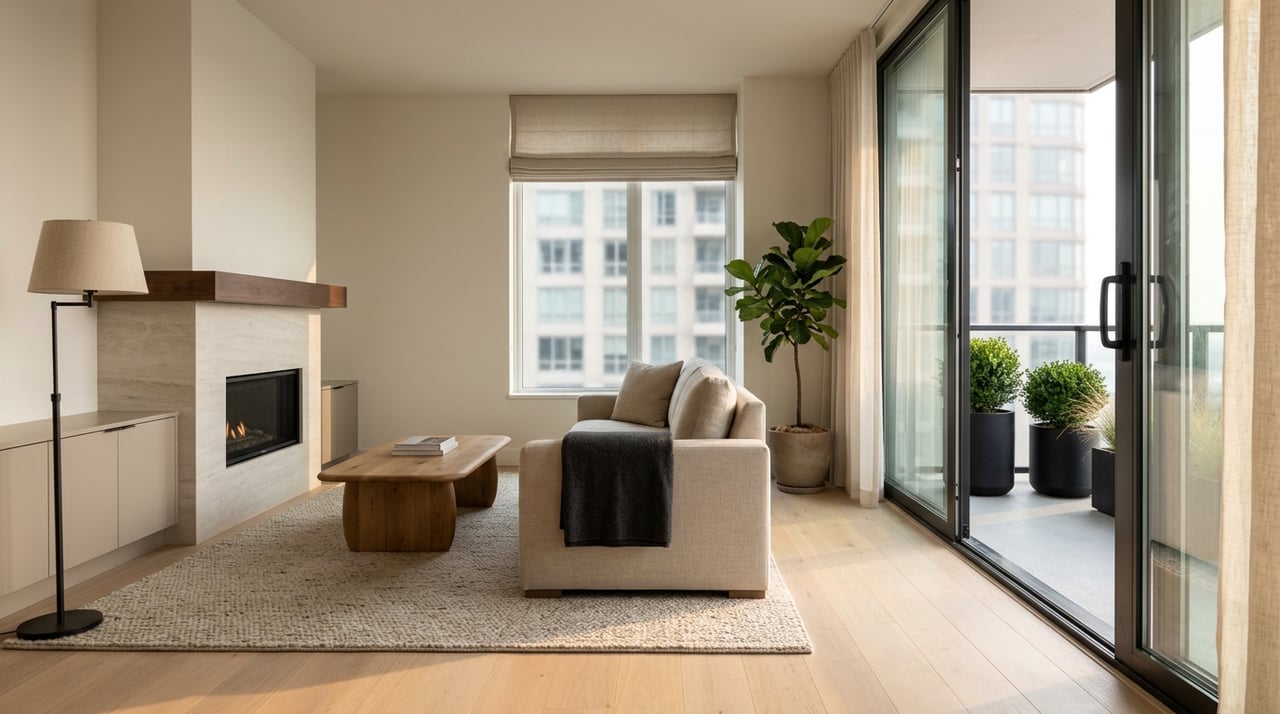
What Midtown High-Rise Living Really Feels Like
June 25, 2026
June 25, 2026
If you are picturing Midtown high-rise living as nonstop city energy with a view, you are not wrong. But the real day-to-day experience is more specific than that, and it helps to know what life in a Midtown tower actually feels like before you buy. From walkable errands and park access to parking questions and noise levels, here is what you can realistically expect from high-rise living in Midtown. Let’s dive in.
Midtown is one of Atlanta’s most vertical, transit-connected neighborhoods. According to Midtown Alliance, the residential core includes nearly 7,000 units, many of them on or just blocks from Peachtree Street, with access to MARTA rail, bus service, bike lanes, and interstate connections.
That shapes your lifestyle in a big way. In Midtown, daily life often revolves around walking, transit, and nearby conveniences rather than hopping in the car for every errand. If you want a home base that keeps you close to coffee shops, restaurants, parks, and arts venues, that is a big part of the appeal.
Midtown Alliance also highlights four MARTA rail stations in the core, along with tree-lined sidewalks and a pedestrian-focused street network. For many buyers, that means Midtown feels more like a live-work-play district than a traditional residential area.
In many Midtown towers, convenience starts the moment you get home. Representative buildings in the area commonly offer features like 24-hour concierge service, fitness centers, rooftop pools, lounges, package retrieval, controlled-access parking, and pet-focused amenities.
That can make everyday routines easier. You may pick up a package downstairs, work out without leaving the building, or meet friends at a rooftop lounge before heading out to dinner. In some buildings, even a grocery option or other street-level retail is part of the experience.
Views are also a real part of the lifestyle. Some Midtown buildings market floor-to-ceiling windows, rooftop gathering spaces, and views of the skyline or nearby parks, which can make your home feel more connected to the city around you.
At the same time, no two towers are exactly alike. Amenity packages vary based on the building, its age, its HOA budget, and how it is managed, so it is important to verify what is actually included in the specific building you are considering.
One of Midtown’s biggest strengths is how easy it is to get around without relying on your car. Midtown Alliance says the district has more than 40 linear miles of sidewalks, including 14 miles of new sidewalks, along with well-lit, tree-lined streets that support a pedestrian-friendly lifestyle.
For you, that can translate into a very different rhythm of life. A dinner reservation, coffee run, workout class, or quick trip to the park may be a short walk instead of a drive across town.
That convenience matters most if you genuinely want to use the neighborhood. Midtown high-rise living tends to feel best for buyers who value access and activity over private yard space or the separation that comes with a detached home.
A common misconception is that high-rise living means giving up green space. In Midtown, that is not really the case, because Piedmont Park is such a defining part of the neighborhood experience.
The Piedmont Park Conservancy says the park offers more than 200 acres of green space and is open daily from 6 a.m. to 11 p.m. Whether you want a morning walk, a weekend picnic, or a place to unwind after work, that kind of access can become part of your routine.
For pet owners, the outdoor appeal is even stronger. Piedmont Park includes a three-acre off-leash dog park with separate areas for large and small dogs, and Midtown Alliance has also highlighted dog-friendly amenities in the district, including the 10th Street Park dog park.
If you are comparing Midtown to a more suburban lifestyle, this is one of the biggest tradeoffs to understand. You may not have a private backyard, but you do gain access to substantial shared green space nearby.
Midtown is not just about where you live. It is also about what surrounds you once you walk outside.
Midtown Alliance says the district includes 25 arts and cultural venues, more than 30 permanent performing arts groups, 22 entertainment facilities, and more than 70 public art installations. The Woodruff Arts Center campus anchors the area with the Alliance Theatre, Atlanta Symphony Orchestra, and High Museum of Art, while the Fox Theatre is also a major nearby destination.
That cultural density creates a lifestyle that feels active and connected. If you enjoy having performances, museums, and public art woven into your regular routine, Midtown offers a level of access that is unusual in a residential neighborhood.
Dining is another major part of that equation. Midtown Alliance says there are more than 150 restaurants in the district, ranging from casual options to fine dining, and many are easy to reach on foot.
As appealing as Midtown high-rise living can be, it is not a one-size-fits-all lifestyle. The biggest practical questions usually come down to parking, noise, pet rules, and building operations.
Parking is one of the most important things to confirm before you buy. MARTA notes that Midtown and Arts Center stations have very limited daily parking, and Midtown Alliance says off-street parking in Midtown is privately owned and operated, with no public off-street parking in the district.
That means you should not assume parking works the same way from one building to the next. Ask whether the unit includes a deeded space, a leased space, guest parking, EV charging, or storage.
This is one of the clearest examples of how Midtown is designed around urban mobility more than large private driveways. If parking convenience matters a lot to you, this should be near the top of your checklist.
Midtown is full of activity, and that energy is part of the draw. But it can also affect how quiet your home feels.
With parks, rail stations, arts venues, restaurants, and event activity nearby, units on lower floors or facing major corridors may feel more lively. Higher floors or interior-facing stacks may feel quieter, depending on the building.
This is worth thinking through during your search. If you love city energy, a more active exposure may feel exciting. If you want a calmer home environment, unit position becomes especially important.
Midtown can be a strong fit for pet owners, but the details depend on both the building and local park rules. Some current buildings advertise pet spas and pet-friendly features, which shows how important this has become in the market.
Still, you will want to verify the specifics. Breed or size rules, pet fees, elevator access, relief areas, and other policies can vary from building to building.
Midtown high-rise living tends to fit buyers who want a more connected, convenience-driven lifestyle. If you like the idea of stepping outside to parks, restaurants, arts venues, and transit, Midtown often delivers that in a way few Atlanta neighborhoods can.
It can be especially appealing if you want less home maintenance and more access to experiences. Many daily needs can happen inside the building or just a few blocks away, which is part of why tower living feels so efficient for the right buyer.
On the other hand, if you strongly prefer detached-home privacy, abundant storage, or easy car-centric routines, Midtown may feel like more of an adjustment. The best fit usually comes down to how you want your everyday life to function.
Because Midtown towers can differ so much, it helps to compare them with a practical lens. Here are a few smart questions to ask as you narrow your options:
These are the details that shape your day-to-day experience. In Midtown, the building matters just as much as the neighborhood.
Midtown high-rise living is less about square footage alone and more about how you want to live. You are often trading yard space and detached-home privacy for walkability, views, transit access, cultural energy, and a long list of nearby conveniences.
For the right buyer, that trade can feel worth it every single day. If you want a home that puts you close to Piedmont Park, the arts, dining, and a more connected city lifestyle, Midtown offers a compelling option.
If you are weighing Midtown against other intown neighborhoods, a thoughtful building-by-building strategy matters. When you understand the differences in amenities, parking, noise, and layout, you can find the tower that truly fits how you want to live.
If you are exploring Midtown or comparing high-rise options across intown Atlanta, Catherine Newsome can help you evaluate the lifestyle, the building details, and the market with a clear, strategic approach.
November 19, 2026

November 12, 2026
November 5, 2026
October 29, 2026
October 22, 2026
October 15, 2026
October 8, 2026
October 1, 2026
September 24, 2026
Whether you're buying or selling, Catherine Newsome is committed to guiding you through every step of the real estate process with integrity, passion, and personalized service. Let her help you find your dream home or sell your property for the best price—your goals are her priority!